
作者:蔡翠红 发布时间:2026-03-05 14:00:45 来源:China International Studies+收藏本文
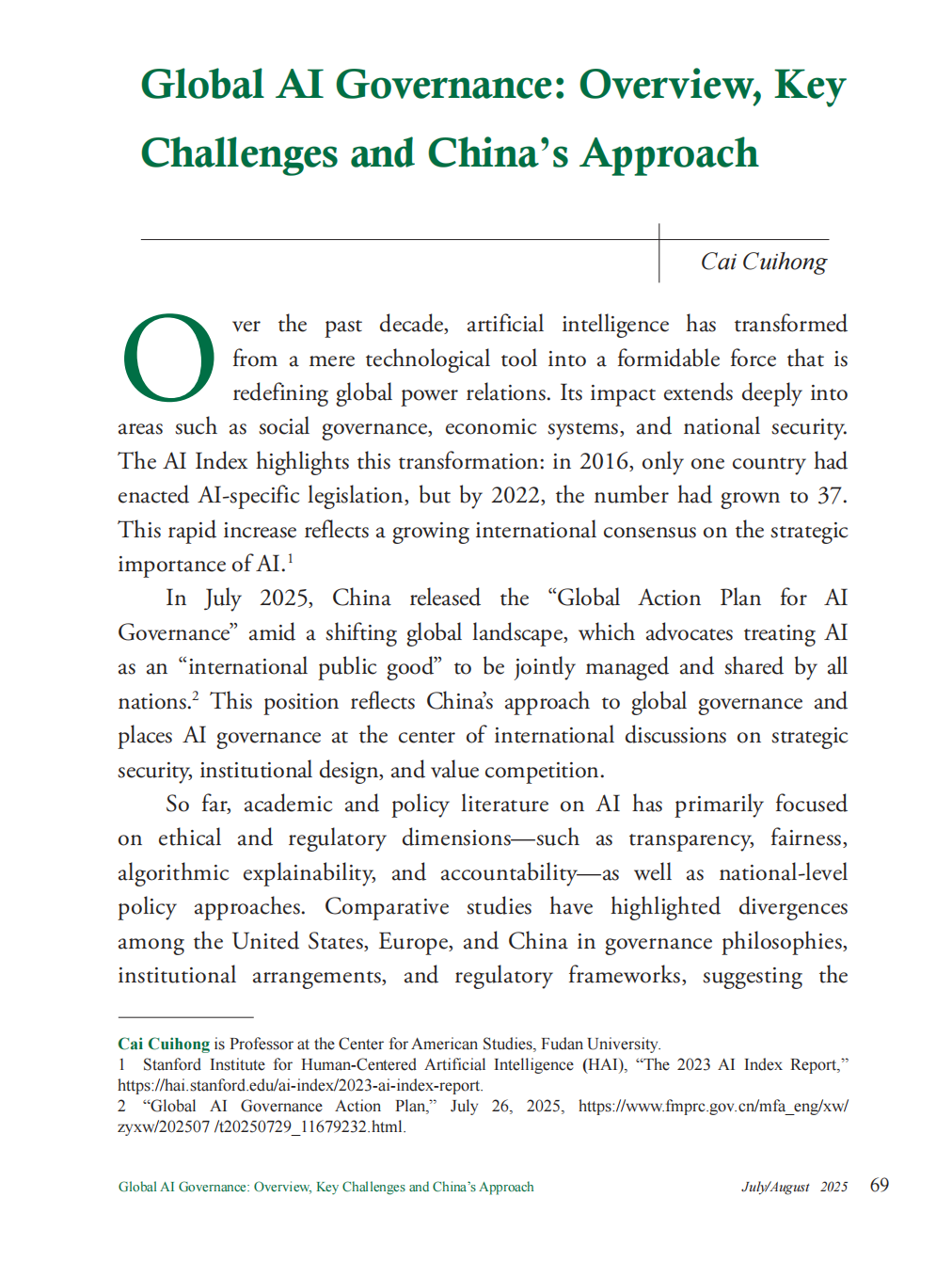
近日,复旦大学国际问题研究院教授,全球人工智能创新治理中心副主任蔡翠红研究成果“Global AI Governance: Overview, Key Challenges and China’s Approach”(《全球人工智能治理:概况、关键挑战与中国方案》)发表于 China International Studies(《国际问题研究》英文版)2025年第4期(总第113期)。文章基于全球人工智能深度嵌入经济发展、社会治理与国家安全领域的背景,深度分析了全球人工智能治理体系加速制度化过程中及全球治理格局中存在的多重问题。文章指出,中国通过强调发展权与安全并重、推进科技自主与开放合作、强化南南合作与能力建设,形成了系统化的治理倡议与行动的中国方案,为全球人工智能治理提供了有别于西方路径的制度选择,拓展了构建更加包容、公平与可持续全球治理体系的现实可能性。
作者/Author
蔡翠红,复旦大学国际问题研究教授,全球人工智能创新治理中心副主任
Cai Cuihong, Professor of International Relations with the Institute of Intenational Studies, Fudan University; Deputy Director of the Center for Global AI Innovative Governance.
摘要/Abstract
人工智能正深度嵌入经济发展、社会治理与国家安全领域,全球人工智能治理体系在加速制度化的同时,呈现出规则碎片化、技术与资源高度集中、治理能力不对称以及价值叙事分化等突出特征。当前治理格局表现为多层嵌套与多中心并存,中美欧在治理理念、制度工具与战略目标上的路径分化不断加剧,同时科技企业与标准组织作为“准治理者”的崛起,重塑了全球治理权力结构。相较之下,全球南方国家在规则制定、资源获取与议程设置中持续处于结构性弱势,智能鸿沟呈现固化趋势。在此背景下,中国通过强调发展权与安全并重、推进科技自主与开放合作、强化南南合作与能力建设,并提出系统化的治理倡议与行动方案,为全球人工智能治理提供了有别于西方路径的制度选择,拓展了构建更加包容、公平与可持续全球治理体系的现实可能性。
Artificial intelligence is becoming deeply embedded in economic development, social governance, and national security, accelerating the institutionalization of global AI governance. At the same time, the emerging governance landscape is characterized by increasing fragmentation of rules, high concentration of technological capabilities and resources, asymmetric governance capacities, and growing divergence in normative narratives. Global AI governance has taken on a multilayered and polycentric structure, within which the United States, the European Union, and China have pursued increasingly differentiated governance approaches in terms of principles, regulatory instruments, and strategic objectives. The growing role of technology firms and standards-setting bodies as quasi-governance actors has further reshaped global power relations. Within this evolving system, countries of the Global South remain structurally disadvantaged in agenda-setting, rule-making, and access to technological resources, reinforcing the persistence of the global AI divide. Against this backdrop, China’s governance approach—emphasizing the balance between development and security, technological autonomy combined with openness, enhanced South–South cooperation, and capacity-building initiatives—offers an alternative institutional pathway for global AI governance and expands the prospects for a more inclusive, equitable, and sustainable global governance order.
关键词/Key Words
人工智能治理;全球治理;制度碎片化;全球南方;中国方案
Artificial Intelligence Governance; Global Governance; Institutional Fragmentation; Global South; China’s approach
原文链接/Link
https://www.ciis.org.cn/gjwtyj/ywqk/202512/t20251208_9842.html?sessionid=

CopyRight©2007 复旦发展研究院版权所有 备案号/经营许可号:沪ICP备05006147号
地址:上海市邯郸路220号智库楼 邮编:200433 电话:86-21-55670203 传真:86-21-55670203
电子邮箱:fdifudan@fudan.edu.cn