Dear Colleagues,
The Global South has long been understood as a geopolitical category associated with the “Third World,” histories of colonialism, and conditions of political and economic marginalization. In recent years, however, amid profound transformations in international relations, structures of knowledge production, and the global order of academic discourse, the Global South has increasingly become a crucial intellectual terrain for understanding contemporary global transformations. Within the humanities and social sciences, Western academic thought has long dominated theoretical construction and the formulation of research problems. This has produced a relatively entrenched center–periphery structure of knowledge, in which scholarship, theoretical resources, and intellectual contributions from the Global South have received insufficient recognition and systematic examination.
Australian sociologist Raewyn Connell’s 2007 book, Southern Theory: The Global Dynamics of Knowledge in Social Science, was among the first works to systematically expose global inequalities in the production of social scientific knowledge and to call for greater recognition of the theoretical contributions and intellectual expressions of societies in the Global South. Since then, Southern Theory has developed into a global intellectual current intersecting with decolonial thought, postcolonial theory, and indigenous and endogenous knowledge traditions. For Chinese academia, Southern Theory not only prompts a reassessment of the global structures of knowledge production, but also provides important intellectual resources for area studies, Global South studies, and the development of China’s autonomous knowledge system in philosophy and the social sciences.
Within Chinese academia, research on and translations of Southern Theory have established an important foundation. Scholars including Professor Jing Jun were among the first in China to introduce and develop Southern Theory as a field of inquiry. Southern Theory has been understood as referring to the social theories that emerged in developing countries through their modern struggles against colonialism, their pursuit of national independence, and their efforts toward social transformation and development. This body of research places particular emphasis on the theoretical contributions of societies historically positioned as the epistemic “Other.” It calls for the recovery, systematic examination, and interpretation of intellectual resources originating in the Global South. Such work should proceed alongside sustained engagement with Western social theory and should be guided by an open, equitable, and inclusive approach to global knowledge.
Chinese humanities and social sciences are currently advancing the development of an autonomous knowledge system. In this context, autonomy does not mean intellectual isolation or a narrowly inward-looking form of localization. Rather, it requires a broader global vision and more equitable relationships in the production of knowledge. Extending the long-established dialogue between East and West to include the countries and societies of the Global South, and engaging with the intellectual traditions, social theories, and knowledge practices of Asia, Africa, Latin America, the Caribbean, Oceania, and other regions, can broaden the range of research questions, theoretical points of reference, and methodological resources available to Chinese scholars. It can also contribute to the formation of a genuinely global system of knowledge in the humanities and social sciences.
In response to these concerns, Professor Jing Jun, Research Professor Gao Liangmin, and Associate Professor Xiong Xinghan have formed a joint research team to advance the study of Southern Theory on the basis of previous research achievements. We now issue this open call for papers to scholars in China and around the world and plan to convene a paper workshop in 2027. We warmly invite scholars, early-career faculty members, postdoctoral researchers, master’s and doctoral students, and outstanding undergraduates working in Global South studies, area studies, intellectual history, social and political thought, social theory, and related fields to submit their work. Through this initiative, we hope to contribute to the systematic documentation and interpretation of intellectual traditions in the Global South and to sustained theoretical dialogue across regions and disciplines.
I. Call Background and Academic Position
A collaborative research initiative on intellectual and theoretical traditions in the Global South was launched in 2018. In August 2024, Southern Theory: The Intellectual Contributions of the Other in the Humanities and Social Sciences (《南部理论:人文社科思想的他者建树》), edited by Jing Jun and Gao Liangmin and featuring contributions from numerous young scholars, was published by China Social Sciences Press. The volume examines at least twenty-five influential scholars and thinkers in the humanities and social sciences from Asia, Latin America, Sub-Saharan Africa, West Asia and North Africa, Eurasia, and other regions. It contains twenty-six thematic research articles that systematically explore the intellectual traditions, theoretical innovations, and knowledge contributions of the Global South. As an important interim achievement, the volume highlights several major dimensions of Southern Theory research: critique, continuity, inclusiveness, local rootedness, and intellectual mobility.
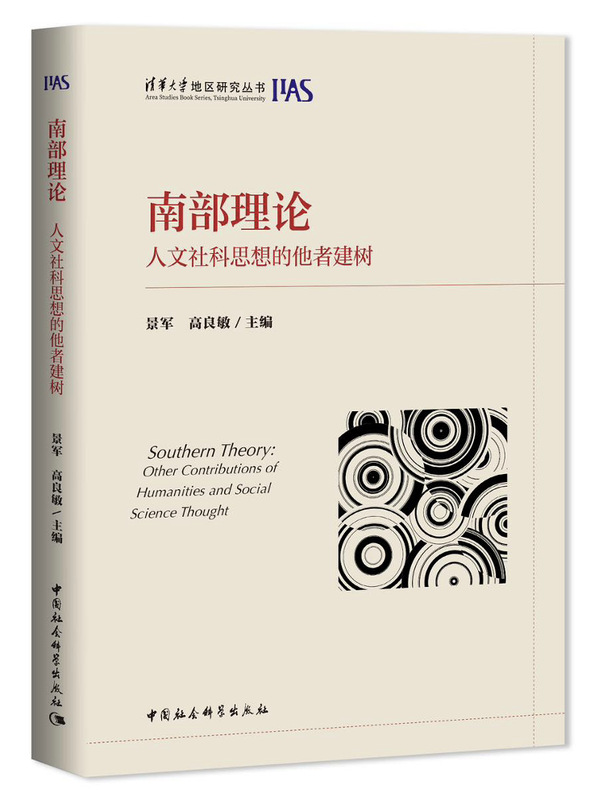
Building on this foundation, the present call seeks to move beyond the introductory presentation of individual thinkers and theoretical resources toward more sustained analysis of research questions, intellectual genealogies, and the mechanisms through which knowledge is produced. We are particularly interested in the following issues.
First, Global South thought should not be treated merely as a response or supplement to Western theory, or as a body of local cases to which Western theories are applied. Rather, it constitutes original knowledge production arising from particular historical circumstances, social structures, and political and economic conditions.
Second, research on Southern Theory should not be limited to the enumeration of “non-Western thought.” It should further examine the formation of concepts, the articulation of research problems, methodological approaches, and theoretical tensions within Global South intellectual traditions.
Third, when Chinese scholars undertake Global South studies, overseas ethnographic research, and area studies, they should engage more fully with the intellectual traditions and theoretical expressions of the societies they study. The Global South should not be treated merely as a source of empirical material or as an object of policy analysis.
Fourth, research on Southern Theory should contribute to a more equitable global dialogue on knowledge production and help establish more reciprocal, dialogical, and intellectually generative relationships between the Global North and the Global South, as well as between China and the wider world.
This call for papers is not centered on a single scholar or a single theoretical framework. Its central concern is the intellectual and theoretical contributions of the Global South. We encourage authors to examine theoretical resources from Global South countries and regions through diverse regional, disciplinary, intellectual, and historical perspectives, and to discuss their significance for contemporary social sciences, the humanities, area studies, and the development of China’s autonomous knowledge system.
Professor Jing Jun has played an important role in introducing, articulating, and advancing Southern Theory in Chinese academia. Research Professor Gao Liangmin has conducted extensive field research in East Africa, with research interests spanning health equity, global health, pastoral livelihoods, African social thought, and China–Africa cultural interactions. Associate Professor Xiong Xinghan specializes in the African island states of the Indian Ocean and Francophone Africa, with research interests in African human geography, identity, Indian Ocean history, and knowledge production in area studies. The joint research team will adopt an open and collaborative approach to foster deeper dialogue between Chinese academia and intellectual communities in the Global South, and to promote the documentation, interpretation, comparative study, and creative development of intellectual resources from the Global South.
II. Call Themes
This call for papers focuses on intellectual traditions, social theories, and theoretical contributions in and from the Global South. Submissions may address, but are not limited to, the following topics:
Core Issues in Southern Theory: Conceptual genealogies, theoretical boundaries, central questions, and the relationships between Southern Theory and postcolonial theory, decolonial thought, indigenous and endogenous knowledge systems, and related theoretical traditions;
Global South Thinkers and Intellectuals: Systematic examination and interpretation of important thinkers, theorists, and intellectuals from Asia, Sub-Saharan Africa, West Asia and North Africa, the Caribbean and Latin America, Oceania, Central and Eastern Europe, and other regions, as well as their academic and intellectual contributions;
Southern Theory and Knowledge Production in Area Studies: The ways in which Southern Theory can provide theoretical resources, research questions, and methodological insights for the development of autonomous approaches to knowledge production in area studies;
Southern Theory in Dialogue with Chinese Social Sciences: The relationship between Southern Theory and the development of a Chinese system of philosophy and social sciences, as well as its implications for research methods and theoretical construction in the Chinese humanities and social sciences;
Interdisciplinary Applications of Southern Theory: Applications and extensions of Southern Theory in sociology, anthropology, ethnology, area studies, political science, economics, law, communication studies, language and literature, history, and other disciplines;
South–South Knowledge Cooperation and Mutual Learning among Civilizations: Mechanisms of collaborative academic production among Global South countries, pathways of knowledge circulation, the translation and cross-cultural circulation of concepts and ideas, and their implications for contemporary global governance and mutual learning among civilizations;
Theoretical Discovery and Reflection in Global South Field Research: Ways of understanding the concepts, categories, knowledge systems, and theoretical expressions of the societies under study through field research, and of rethinking social science knowledge production from the perspectives of the communities and societies being studied;
Other Original Research Related to Southern Theory and Global South Intellectual Genealogies.
III. Target Contributors
This call for papers is open to scholars, faculty members, and researchers in China and abroad working in Global South studies, intellectual traditions in the humanities and social sciences, social theory, area studies, and related fields. Master’s and doctoral students, as well as outstanding undergraduates with a solid research foundation and clearly defined research questions, are also welcome to submit their work.
For papers that are accepted and whose authors agree to their inclusion in the edited volume, full or partial funding will be provided for travel and accommodation expenses related to participation in the paper workshop.
IV. Submission Requirements
Submissions must be original, unpublished academic papers. Submissions by Chinese-speaking authors should normally be written in Chinese. Authors who do not write in Chinese may submit manuscripts in English. The research team will arrange for Chinese translation where necessary.
Chinese manuscripts should normally be between 12,000 and 15,000 Chinese characters, including the abstract, keywords, main text, references, and notes. English manuscripts should normally be between 6,000 and 8,000 words.
Submissions must include the following elements: title, author’s name and institutional affiliation, abstract, three to five keywords, main text, and references. Chinese abstracts should not exceed 300 Chinese characters, and English abstracts should be approximately 200 words.
Manuscripts should strictly follow the formatting, note, and reference requirements of the China Social Sciences Press Style Guide for Book Editing. Please see Appendix II.
Submissions should be sent as Microsoft Word documents to one of the dedicated email addresses listed below. Files should be named according to the following format:
[Southern Theory Submission] + Author Name + Paper Title
V. Manuscript Review
Manuscripts substantially generated or written by generative AI will not be accepted.
Manuscripts will undergo a two-stage review conducted by the joint research team and invited experts in relevant fields. Authors of papers that pass the preliminary review will be invited to revise their manuscripts and participate in the workshop. One author of each shortlisted paper will be invited to attend. Following the workshop, manuscripts revised in light of workshop discussions and feedback will undergo a final review for possible inclusion in the edited volume.
The final selection of papers is intended for publication in an edited volume. Specific publication arrangements will be announced after the review process.
No publication, submission, or review fees will be charged.
VI. Important Dates
Abstract Submission Deadline: July 15, 2026
Full Paper Submission Deadline: January 31, 2027
Preliminary Review Results Notification: February 28, 2027
Paper Workshop: Tentatively scheduled for April or May 2027
Final Revision Deadline for Accepted Papers: July 1, 2027
Book Publication: Late 2027 or early 2028
VII. Submission Contacts
Please send your abstract or manuscript to either of the following email addresses by the relevant deadline. The subject line should follow the format:
[Southern Theory Submission] + Author Name + Paper Title
Gao Liangmin, Fudan University: gaolm@fudan.edu.cn
Xiong Xinghan, Fudan University: xiong_xinghan@fudan.edu.cn
We warmly invite scholars from China and around the world to join us in recovering the rich intellectual traditions and contemporary significance of the Global South and in contributing to a more diverse, equitable, open, and inclusive global community of knowledge.
Southern Theory Joint Research Team
Fudan Development Institute
Laboratory for Global South Field Research, Fudan University
June 22, 2026
Appendix: Southern Theory (Volume II) Call for Papers and 2027 Paper Workshop Announcement-Reply Form and Appendix

CopyRight©2007 复旦发展研究院版权所有 备案号/经营许可号:沪ICP备05006147号
地址:上海市邯郸路220号智库楼 邮编:200433 电话:86-21-55670203 传真:86-21-55670203
电子邮箱:fdifudan@fudan.edu.cn