作者: 发布时间:2026-10-07 来源:Fudan University+收藏本文
英国巴斯大学拉丁美洲研究高级讲师(副教授)、复旦发展研究院访问学者胡安·巴勃罗·费雷罗(Juan Pablo Ferrero)博士于今年9月到访复旦大学,围绕拉丁美洲政治社会学开展访学研究。他长期关注阿根廷、巴西等南美国家社会动员与政治变迁之间的关系。日前,费雷罗博士在复旦发展研究院和复旦大学全球南方田野调查实验室举办讲座,并接受复旦大学融媒体采访,分享他对拉美政治“再政治化”、民主韧性与治理合法性的观察。
费雷罗博士指出,所谓“再政治化”,是指曾被视为已有定论的议题重新进入公共争论:市场与国家的边界、资源开发与环境保护、教育和社会保障等问题,正以不同方式塑造拉美国家的政治竞争。他认为,社会运动与制度性政治之间的联系影响着公众诉求能否得到有效回应;民主制度能够延续,并不必然意味着治理质量更高。选举固然是政府合法性的重要来源,但执政表现、回应现实问题的能力同样关键。面对全球南方的多元经验,他主张应立足具体历史语境,审慎比较、避免简单套用单一模式。
以下为采访全文:

In September, as part of the Fudan Development Institute Visiting Scholar Program, Dr. Juan Pablo Ferrero, Senior Lecturer in Latin American Studies at the University of Bath, U.K., visited Fudan University for a research stay. We sat down with him to discuss Latin America's changing political landscape. His research focuses on the political sociology of South America, particularly the relationship between social mobilisation and political change in post-transition Argentina and Brazil.
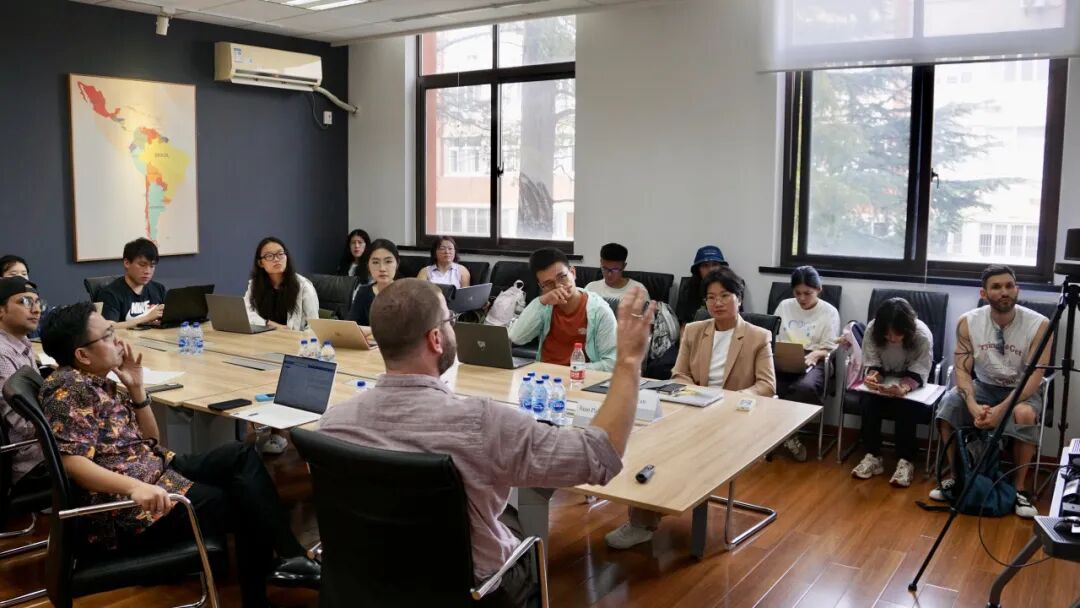
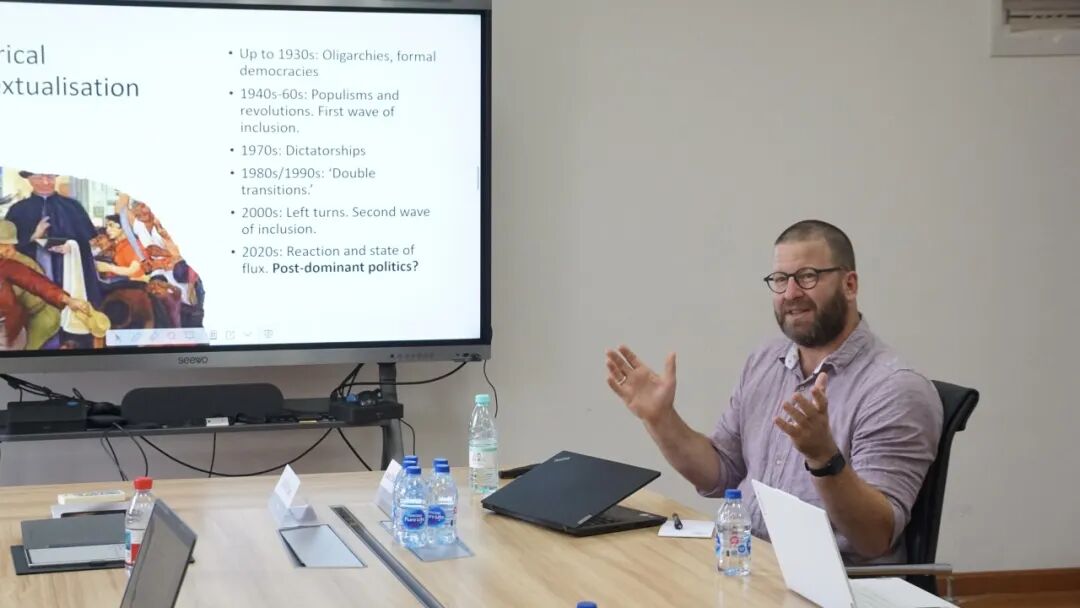
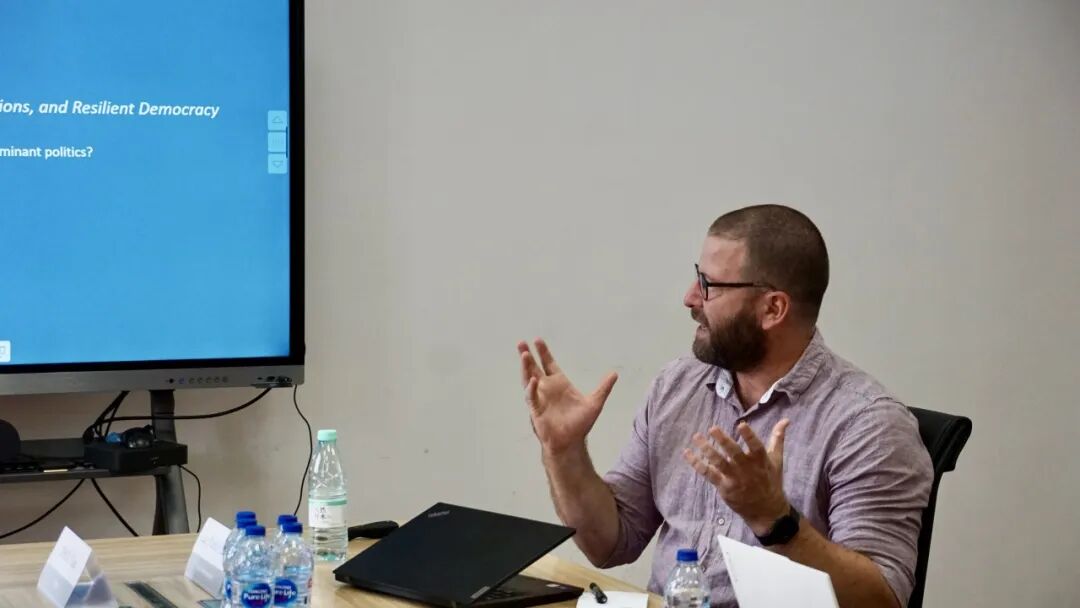
The conversation followed his lecture, “The Political Pendulum in Latin America: Repolitisation, Democratic Tensions, and Resilient Democracy,” hosted by the Fudan Development Institute and Fudan University’s Global South Field Research Laboratory. The lecture explored how repeated shifts between left- and right-wing governments reflect a broader reopening of debates over social demands, economic policy and development—and why these tensions have not necessarily resulted in regime breakdown.
We discussed how social movements and political leaders give expression to public demands, what democratic resilience does—and does not—tell us about governance, and how governments establish legitimacy beyond winning elections. Dr. Ferrero also reflected on what other countries in the Global South might learn from Latin America’s experience.
The following interview has been edited, condensed and reorganised for clarity.
Q: You describe Latin America’s political transformation as a process of “repoliticisation.” What does this mean, and which issues have returned to public debate?
A: From my understanding, repoliticisation is about things that have remained settled becoming contested and conflictual. Something that was previously considered non-conflictual becomes a matter of disagreement. Conceptually, it means that something that was outside the conversation becomes part of the conversation.
The economy is one example. If we go back to the 1990s, the main consensus was that the state-led development model had reached exhaustion and that market-led reforms were the way forward. Across the political spectrum, political actors agreed with that approach to varying degrees. There was not much discussion about more or less state intervention.
In that sense, the economy was depoliticised: there was broad agreement that market reforms were needed to reduce inflation.
That has now changed. Today, we see disagreements about what should be left to the market and what should fall within the sphere of state intervention and regulation. There is no longer a broad consensus about what countries should do. The economy has become a contested issue again, taking different forms in different countries.
Q: With these questions open to debate again, how useful is the traditional distinction between left and right? Around which issues—and through what forms of political representation—might political competition develop?
A: The meaning of left and right in Latin America has always been more complicated than in other places. What we call the left generally consists of more populist or redistributionist coalitions. They are not seeking to renationalise the entire economy, but they do seek greater regulation of the relationship between labour and capital.
Political realignments are likely to occur around key issues: the nature of constitutional arrangements, the economy, the extent of state intervention, and the environment. Should natural resources be protected or exploited? Should education be private or public? Should there be broader social assistance and some form of welfare state for those excluded from market dynamics?
The political mediation of those questions will vary between countries. In our paper, we discuss different forms of representation or reconfiguration. These issues may be expressed through competition between personalities, through competition between political forces seeking to address them, or through proposals that more fundamentally challenge the existing system.
We can identify common questions, but how they are translated into the political arena will not be the same in every country.
Q: How do social movements help translate these debates into institutional politics? What allows demands expressed in the streets to gain an institutional response?
A: In the context of Latin America, we should think of social movements as complementing political institutions. In some countries, the linkages between social movements or street protests and institutional representation are stronger, and there is therefore greater political representation. This has long been more the norm than the exception in the region.
We need to consider both the institutional and extra-institutional dimensions. By combining the two, we gain a better understanding of what representation looks like, how effectively it functions, and where it may create problems for political stability.
When institutional representatives also challenge the incumbent—for example, when opposition actors participate in social protests, mobilisations and petitions—those who mobilise are more likely to have their demands heard. This gives their claims authority and legitimacy in relation to government.
When there is instead a complete disconnection and a rejection of the government, elites and existing political parties, the situation becomes more difficult. Accountability then operates less through institutions and more through street mobilisation.
Q: What happens when those links weaken? How has the relationship between social mobilisation and political representation changed in Brazil?
A: Brazil developed strong links between social movements and institutional representation through organisations such as the Workers’ Party and the Landless Rural Workers’ Movement. The idea was to mobilise organised workers and the landless while also creating political representation through an organisation such as the Workers’ Party.
Over time, however, those links weakened. These organisations increasingly became part of the establishment, government and elite. There is also a generational gap between their founding members and younger generations, who do not feel that their demands and needs are fully represented by those organisations.
Representational power has also shifted away from institutions such as the Workers’ Party and towards Lula himself. It is increasingly about Lula as an individual rather than the institutional and social-mobilisation trajectory he represents. Brazil is therefore experiencing a personalisation of representation.
At the same time, Lula and Bolsonaro have given voice to discontent and channelled it into political competition. Those voices compete in a political arena marked by tension and repoliticisation.
Q: This brings us back to a central question: how can intense political conflict coexist with regime resilience? Do left- and right-wing forces share deeper assumptions that help explain this?
A: Different governments have different social stakeholders and different approaches to public spending and social protection. There are also important differences over the redistribution of wealth, the recognition of minorities and the protection of civil rights.
However, they share a basic understanding of progress, development and economic growth. One example is the continued reliance on an extractivist model. Mainstream political forces may disagree about how export-oriented the economy should be or how wealth should be redistributed, but they do not fundamentally challenge private property or the idea that natural resources should be used to increase the wealth of the nation.
These fundamental agreements do not put the existing economic order or elite interests in peril. In Latin American history, regime breakdown—the interruption of democracy and movement towards a different type of regime—has often been associated with moments when elite sectors feel that their interests are genuinely threatened and transfer their support from one regime to another. Where those interests have not been fundamentally threatened, we see regime resilience rather than regime breakdown.
But democratic resilience does not necessarily mean good governance or a higher quality of democracy. I share many of the concerns that other scholars have identified. My point is that we need to look closely at what is happening and understand its effects on the political regime without jumping to conclusions. Repoliticisation is a useful analytical key, but it does not mean that the situation is free of problems.
Q: If democratic resilience does not necessarily mean good governance, what sustains a government’s legitimacy? How is the legitimacy conferred by elections related to the legitimacy governments derive from their performance in office?
A: Elections continue to be an important source of legitimacy for incumbent governments. They remain important to governments and citizens and are still celebrated, possibly because of the historical memory of authoritarianism.
At the same time, elections alone are insufficient to explain what is happening. A government can win the presidency by a landslide, but after a few months or a year it may find itself in serious trouble.
The democratic transitions took place in the 1980s, and for younger generations in many countries, the power of that transition—and the memory of repression—is fading.
People are also rewarding results. Depending on the context, voters in El Salvador may reward a reduction in violent crime, while voters in Argentina may reward lower inflation.
The question in Latin America is whether these result-based sources of legitimacy will continue alongside elections, or whether people may eventually say that they prefer results to elections.
In some Latin American countries, we do see greater tolerance for illiberal practices in favour of administrations that can produce results on issues people consider important. What counts as an important result varies according to the context.
Q: You have drawn a distinction between winning elections and sustaining legitimacy in office. More broadly, what can other countries in the Global South learn from Latin America’s experience of social mobilisation, political representation and democratic resilience?
A: It is always difficult to translate context-based experiences elsewhere. There are echoes of conversations that are more global, such as the so-called culture wars. But Latin America has its own history, struggles, successes and resources. I would therefore be cautious about simply translating its models to other contexts.
One area of familiarity with other contexts is how difficult it has become to generate legitimacy, especially for newly elected governments. It is easier for an opposition to defeat an incumbent—or for an unsuccessful incumbent to lose an election—than it is for a new government to generate legitimacy while governing.
In opposition, it is relatively easy to criticise those in power. Once in government, however, political leaders encounter all sorts of difficulties. That challenge of building legitimacy while governing is becoming increasingly important for governments and politicians around the world.
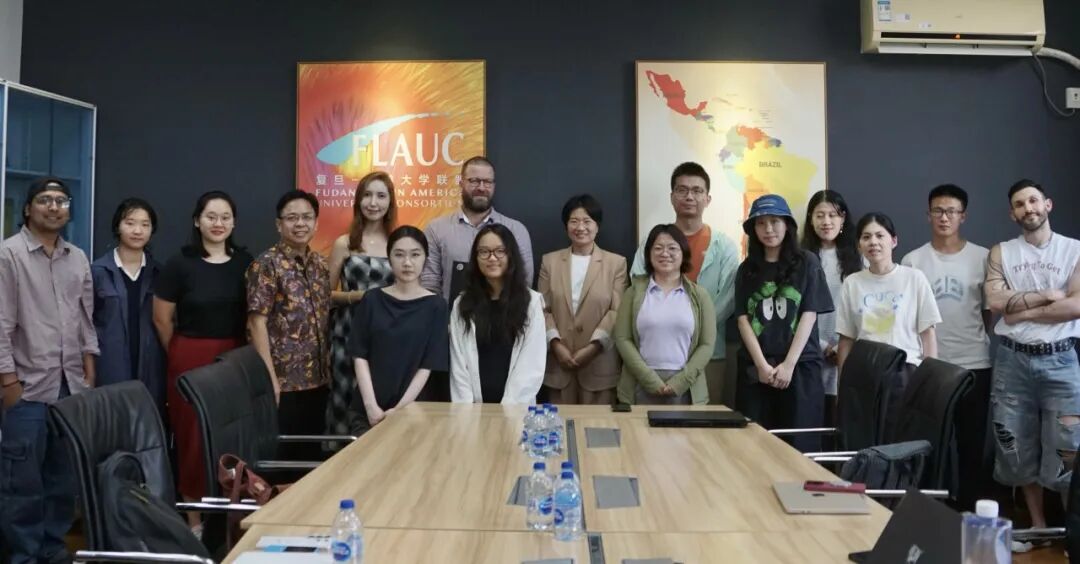
Dr. Ferrero’s reflections remind us that understanding democracy requires looking not only at electoral outcomes, but also at how societies articulate conflict, translate social demands into political representation, and sustain legitimacy beyond the ballot box. His account of repoliticisation connects Latin America’s political pendulum to the reopening of questions once considered settled, while his discussion of resilience cautions against equating the survival of a regime with good governance or a higher quality of democracy. Rather than fitting the region into a single narrative of democratic decline, he calls for close attention to historical context and empirical evidence. The task is not simply to observe which side wins power, but to understand how political conflict is expressed, represented and mediated.

地址:上海市邯郸路220号智库楼
邮编:200433
电话:86-21-55670203
传真:86-21-55670203
电子邮箱:fdifudan@fudan.edu.cn
CopyRight©2007 复旦发展研究院版权所有 备案号/经营许可号:沪ICP备05006147号