作者: 发布时间:2026-10-12 来源:复旦发展研究院+收藏本文
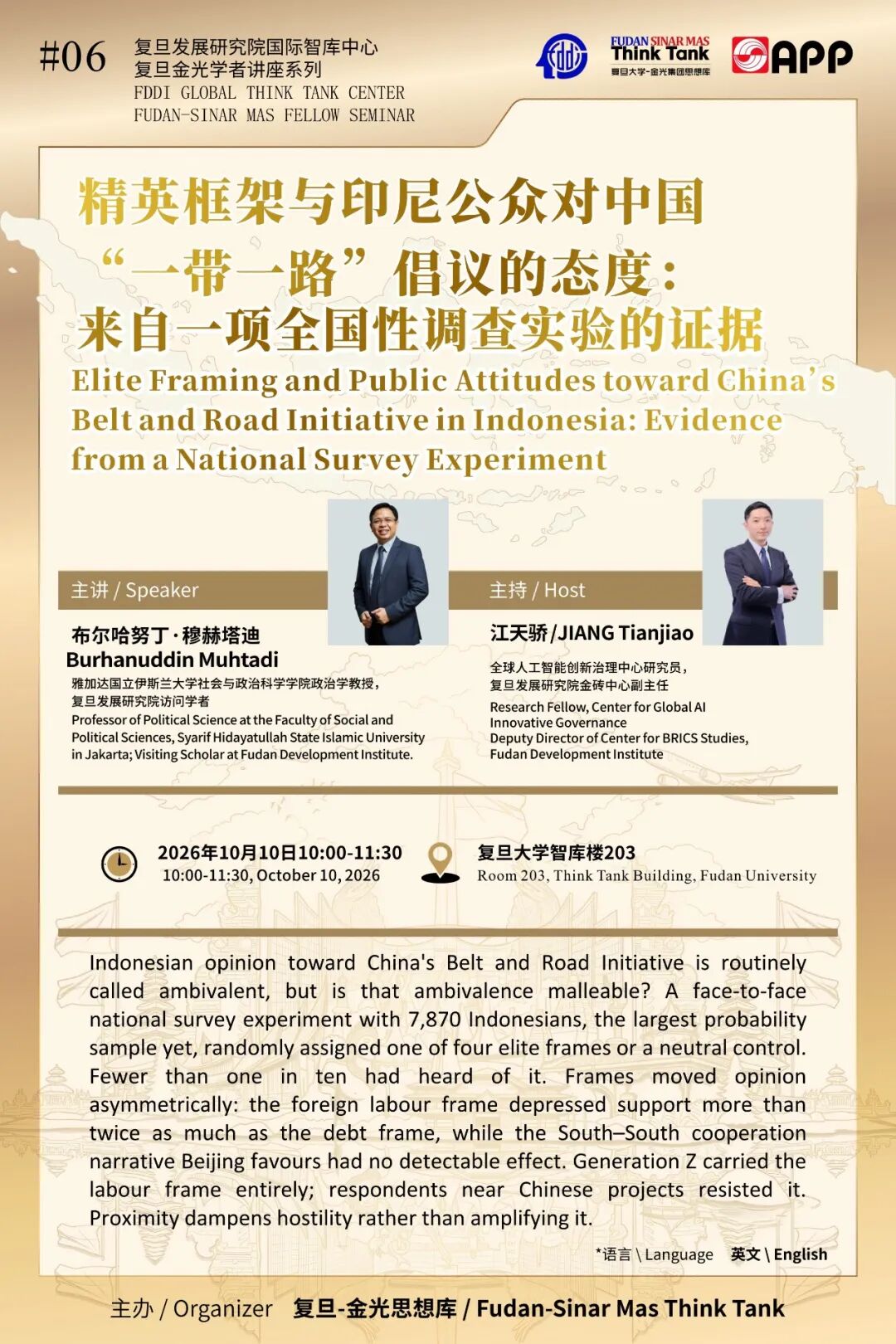
复旦发展研究院国际智库中心
FDDI GLOBAL THINK TANK CENTER
复旦金光学者讲座系列(06)
FUDAN-SINAR MAS FELLOW SEMINAR (06)
主题/Title
精英框架与印尼公众对
中国“一带一路”倡议的态度:
来自一项全国性调查实验的证据
Elite Framing and Public Attitudes toward China’s Belt and Road Initiative in Indonesia: Evidence from a National Survey Experiment
主讲/Speaker
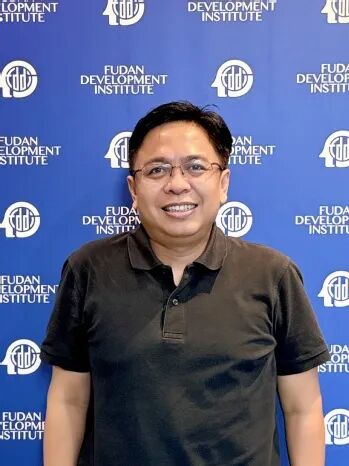
布尔哈努丁·穆赫塔迪
Burhanuddin Muhtadi
雅加达国立伊斯兰大学
社会与政治科学学院政治学教授,
复旦发展研究院访问学者
Professor of Political Science at the
Faculty of Social and Political Sciences,
Syarif Hidayatullah State Islamic University in Jakarta;
Visiting Scholar at
Fudan Development Institute
主持/Host

江天骄
JIANG Tianjiao
全球人工智能创新治理中心研究员,
复旦发展研究院金砖中心副主任
Research Fellow,
Center for Global AI Innovative Governance
Deputy Director of
Center for BRICS Studies,
Fudan Development Institute
时间/Time
2026年10月10日10:00-11:30
10:00-11:30, October 10, 2026
地点/Venue
复旦大学智库楼203
Room 203, Think Tank Building,
Fudan University
主办/Organizer
复旦发展研究院
Fudan Development Institute
复旦金光思想库
Fudan-Sinar Mas Think Tank
语言/Language
英文
English
摘要/Abstract
Indonesian opinion toward China's Belt and Road Initiative is routinely called ambivalent, but is that ambivalence malleable? A face-to-face national survey experiment with 7,870 Indonesians, the largest probability sample yet, randomly assigned one of four elite frames or a neutral control. Fewer than one in ten had heard of it. Frames moved opinion asymmetrically: the foreign labour frame depressed support more than twice as much as the debt frame, while the South–South cooperation narrative Beijing favours had no detectable effect. Generation Z carried the labour frame entirely; respondents near Chinese projects resisted it. Proximity dampens hostility rather than amplifying it.

地址:上海市邯郸路220号智库楼
邮编:200433
电话:86-21-55670203
传真:86-21-55670203
电子邮箱:fdifudan@fudan.edu.cn
CopyRight©2007 复旦发展研究院版权所有 备案号/经营许可号:沪ICP备05006147号