作者:CGAIG 发布时间:2026-06-04 来源:全球人工智能创新治理中心+收藏本文
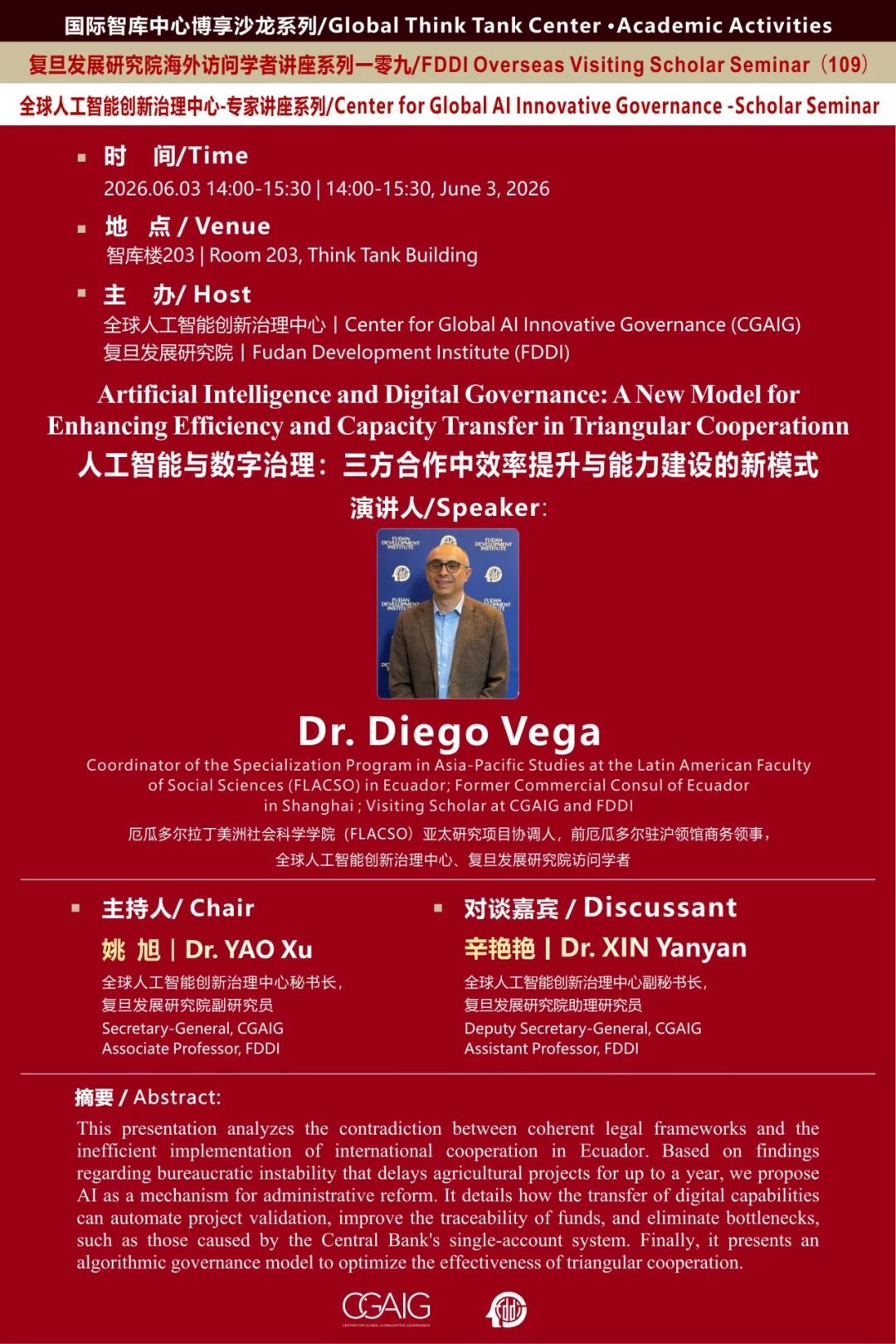
人工智能与数字治理:
三方合作中效率提升与能力建设的新模式
Artificial Intelligence and Digital Governance:
A New Model for Enhancing Efficiency and Capacity Transfer in Triangular Cooperation
演讲人
Speaker
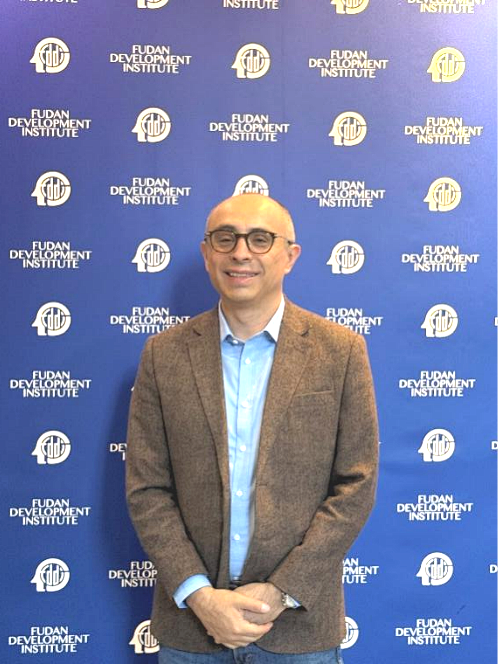
Dr. Diego Vega
厄瓜多尔拉丁美洲社会科学学院(FLACSO)亚太研究项目协调人,前厄瓜多尔驻沪领馆商务领事(2015-2018),全球人工智能创新治理中心、复旦发展研究院访问学者
Coordinator of the Specialization Program in Asia-Pacific Studies at the Latin American Faculty of Social Sciences (FLACSO) in Ecuador; Former Commercial Consul of Ecuador in Shanghai (2015–2018); Visiting Scholar at CGAIG and FDDI
主持人
Chair
姚旭
Dr. YAO Xu
全球人工智能创新治理中心秘书长,
复旦发展研究院副研究员
Secretary-General, CGAIG
Associate Professor, FDDI
对谈嘉宾
Discussant
辛艳艳
Dr. XIN Yanyan
全球人工智能创新治理中心副秘书长,
复旦发展研究院助理研究员
Deputy Secretary-General, CGAIG
Assistant Professor, FDDI
时间
Time
2026.06.03 14:00-15:30
14:00-15:30, June 3, 2026
地点
Venue
复旦大学智库楼203室
Room 203, Think Tank Building, Fudan University
主办
Host
全球人工智能创新治理中心
Center for Global AI Innovative Governance
复旦发展研究院
Fudan Development Institute
摘要
Absract
本讲座剖析了厄瓜多尔法律体系完备与国际合作落地低效之间的矛盾。研究发现,当地行政体系动荡问题致使农业项目审批延误长达一年之久,据此文章提出将人工智能作为行政改革的实施路径。文中阐释了数字技术赋能可实现项目审核自动化、强化资金流向可追溯性,并破除由中央银行单一账户体系等因素造成的流程堵点。文末构建了算法治理模型,旨在提升三方合作的实施效能。
This presentation analyzes the contradiction between coherent legal frameworks and the inefficient implementation of international cooperation in Ecuador. Based on findings regarding bureaucratic instability that delays agricultural projects for up to a year, we propose AI as a mechanism for administrative reform. It details how the transfer of digital capabilities can automate project validation, improve the traceability of funds, and eliminate bottlenecks, such as those caused by the Central Bank's single-account system. Finally, it presents an algorithmic governance model to optimize the effectiveness of triangular cooperation.

地址:上海市邯郸路220号智库楼
邮编:200433
电话:86-21-55670203
传真:86-21-55670203
电子邮箱:fdifudan@fudan.edu.cn
CopyRight©2007 复旦发展研究院版权所有 备案号/经营许可号:沪ICP备05006147号