作者: 发布时间:2017-03-14 来源:复旦发展研究院+收藏本文
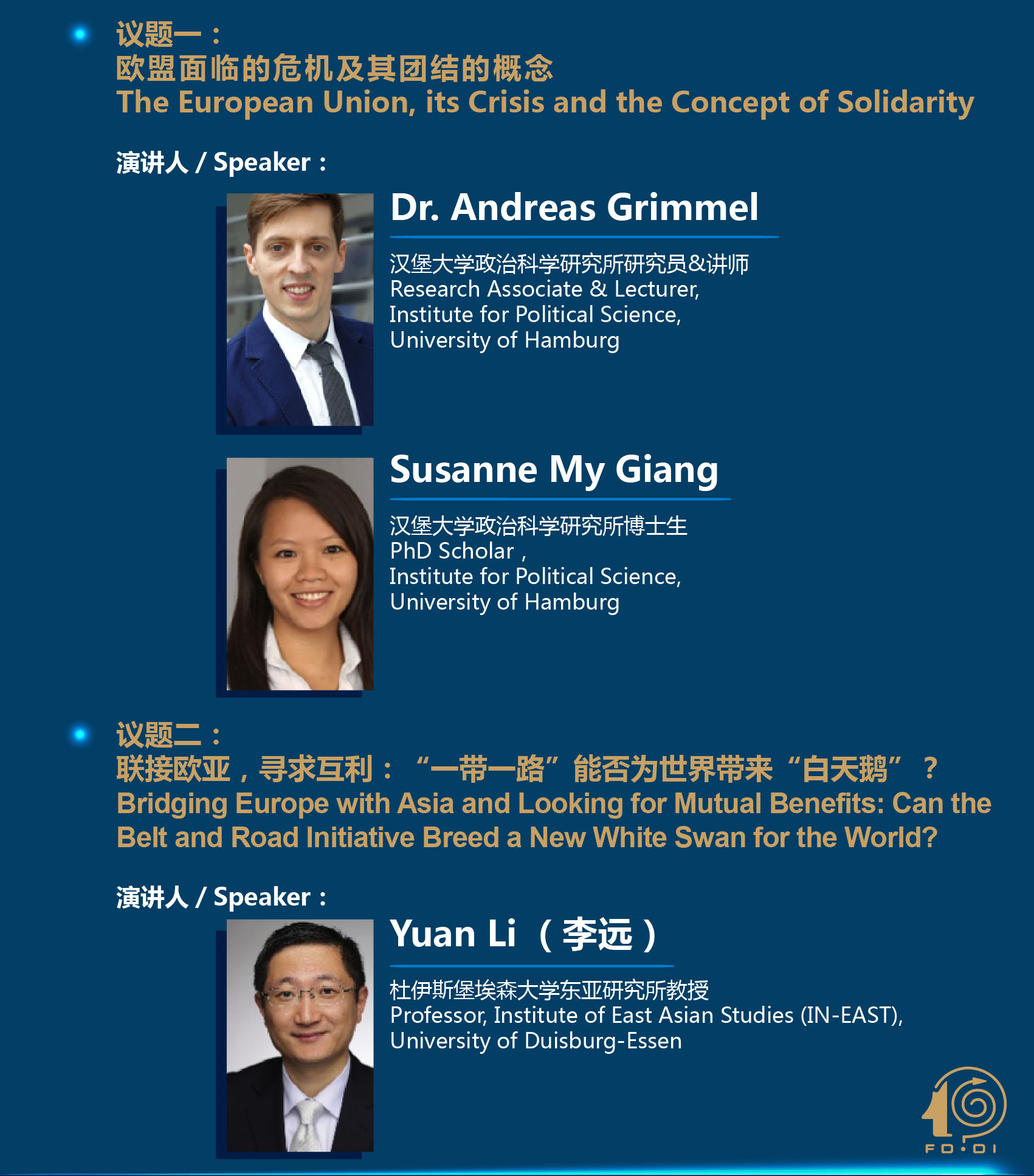
国际智库中心博享沙龙系列Global Think Tank Center · Academic Activities
复旦发展研究院海外访问学者讲座系列十四FDDI Overseas Visiting Scholar Seminar (14)
时间Time
2017年3月14日 14:00PM
14:00PM, March 14th, 2017
地点 Venue
复旦大学智库楼203室
Room 203, Think Tank Building, Fudan University
主办 Host
复旦发展研究院
Fudan Development Institute
议题一
欧盟面临的危机以及团结的概念
The European Union, its Crisis and the Concept of Solidarity
演讲人Speaker:

Dr. Andreas Grimmel
汉堡大学政治科学研究所研究员&讲师
Research Associate & Lecturer,
Institute for Political Science,
University of Hamburg

Susanne My Giang
汉堡大学政治科学研究所博士生
PhD Scholar,
Institute for Political Science,
University of Hamburg
摘要Abstract
The value of solidarity has a long history in Europe, and was given a central place in the canon of values of the European Union (EU). But does this also mean that it takes a central role in the actions of the EU? It will be argued that this is not the case.
This argument will be developed by examining the EU’s crisis management in the ongoing Eurozone and refugee crisis. The aim is to develop an understanding of a major shortcoming of the value of solidarity in the context of the EU, namely a lack of commonality in terms of what solidarity practically implies. And the only way to overcome this shortcoming is to follow a somewhat pragmatic agenda in applying the value in concrete cases and making its common meaning explicit.
议题二
联接欧亚,寻求互利:“一带一路”能否为世界带来“白天鹅”?
Bridging Europe with Asia and Looking for Mutual Benefits: Can the Belt and Road Initiative Breed a New White Swan for the World?
演讲人Speaker:
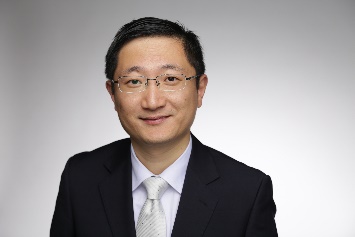
Yuan Li (李远)
杜伊斯堡埃森大学东亚研究所教授
Professor, Institute of East Asian Studies (IN-EAST), University of Duisburg-Essen
摘要Abstract
Finding new long-term growth drivers is utmost urgent for a sustainable recovery of the world economy. The Belt and Road Initiative (BRI), which aims at fostering China’s integration into the world economy, is China’s new opening-up strategy developed in response to changing domestic and international circumstances. If all the goals of the BRI turn into reality, it will affect China and countries along the Belt and Road significantly, becoming a new global economic engine.
In recent years, there are growing numbers of New Silk Road railway lines connecting Chinese cities with Europe. Duisburg is an important hub of these railway lines. Some positive effects can be found on trade facilitation and on reducing institutional barriers through the operation of the railways.
However, without a shadow of a doubt, the current global geopolitical atmosphere is becoming more and more strained. In defiance of this, Europe and China should build better connectivity and more cooperation, bridging thousands-of-kilometres-long gaps for mutual benefits.

地址:上海市邯郸路220号智库楼
邮编:200433
电话:86-21-55670203
传真:86-21-55670203
电子邮箱:fdifudan@fudan.edu.cn
CopyRight©2007 复旦发展研究院版权所有 备案号/经营许可号:沪ICP备05006147号